Why Young Men Feel Left Out After COVID and How to Move Forward
Some young men came out of COVID feeling as if everyone else had been handed a social map, while they were left trying to guess the route.
For boys who were already quiet, thoughtful, anxious, intense, sensitive, neurodivergent, or simply different from the loudest group in the room, lockdowns did not just interrupt lessons. They interrupted practice. Friendships are built through small, repeated moments: walking to class, sharing a joke, sitting near someone at lunch, bumping into the same people again and again. When those moments stopped, many young men lost more than school time. They lost social confidence.
And when life restarted, it could feel as if some people snapped back into place overnight. Others did not. That gap can be painful.

COVID changed more than routines
The pandemic years hit young people at a key stage of development. Teenagers and young adults learn who they are partly through other people. They try things out. They make mistakes. They get rejected. They find their people. They learn what kind of humour lands, how to join a conversation, how to repair tension, and how to cope when they feel awkward.
Many young men missed some of that ordinary learning.
Online lessons, isolation, cancelled clubs, fewer shared spaces, and long stretches at home created a strange kind of social pause. For some, the pause felt safe at first. No messy lunch halls. No pressure to perform. No daily comparison.
Then the world opened again, and the pressure came back quickly.
A young man might think:
“Everyone else knows what they’re doing.”
“I’m behind.”
“I’m boring.”
“I don’t know how to make friends anymore.”
“There must be something wrong with me.”
Those thoughts can feel true, especially when they happen again and again. But feeling left out is not proof that someone is broken. It is often a sign that they have been through a hard social interruption and have not yet found the right places, people, or pace.
Some boys never fitted the main group anyway
There is another layer here. Not every boy naturally fits with the “general kids” who seem to fly at friendships. Some young men do not enjoy the same banter, sport, drinking culture, gaming groups, social media habits, or constant noise. Some dislike forced small talk. Some need more depth before they relax. Some feel older than their peers in one way and younger in another.
That can create a lonely feeling: standing near people, but not feeling with them.
This is where the mix of not fitting in, relationships, being different, struggle can become heavy. The issue is not always a lack of social skill. Sometimes the young man is trying to fit into a group that was never a good match.
There is nothing wrong with wanting connection to feel real. There is nothing strange about needing time to warm up. There is nothing weak about finding groups hard.
The danger comes when “I do not fit here” turns into “I do not fit anywhere.”
That second belief is much more painful, and usually much less true.
Being different may mean finding a different route
A common mistake is to treat fitting in as the main goal. It can help to aim for something better: belonging without pretending.
Fitting in often means hiding parts of yourself so others approve. Belonging means being known enough, accepted enough, and safe enough to relax.
For a young man who feels outside the main crowd, moving forward may involve asking different questions:
Where do I feel even slightly more like myself?
Who leaves me feeling calmer, not smaller?
What subjects make conversation easier?
Do I prefer one-to-one friendships rather than groups?
Am I chasing approval from people I do not even like that much?
What kind of person do I want to become, not just be accepted by?
These are not quick questions. They are identity questions. They help shift the focus from “Why am I not like them?” to “Where might I actually belong?”
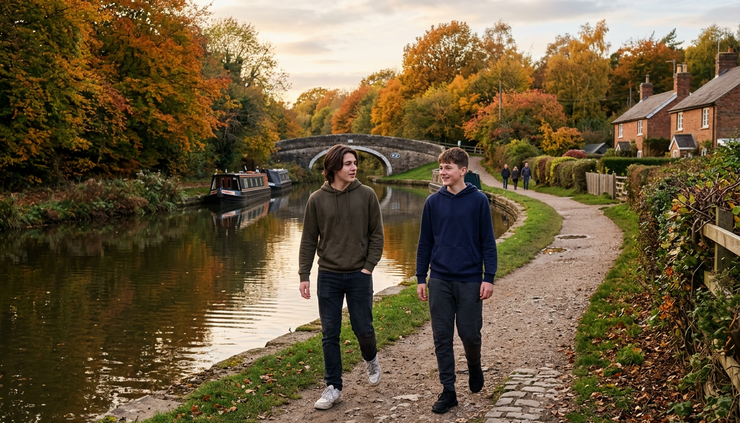
Small steps work better than big reinventions
When a young man feels socially behind, the idea of “putting himself out there” can sound impossible. Big leaps can backfire because they create too much pressure. Smaller steps are more useful.
Start with low-risk contact. Say one sentence to someone after a lesson, at work, at training, or in a shared activity. It does not need to become a friendship straight away.
Try:
“How did you find that?”
“Are you going next week?”
“I’ve not done this before, is it usually like this?”
“What are you playing at the moment?”
“Do you know anyone else here?”
The aim is not to be impressive. The aim is to practise being present.
It also helps to choose settings where conversation has a purpose. Many young men find open social spaces hard, but do better when there is an activity involved. For example:
climbing, gym classes, martial arts, football, running groups
music, film, chess, gaming, coding, mechanics, art, drama
volunteering, youth groups, community projects
part-time work or college societies
Shared activity takes pressure off personality. It gives people something to talk about before they know each other well.
Watch the story you tell yourself
The mind tries to explain pain. If someone feels rejected, the brain may create a harsh story to make sense of it.
“I’m weird.”
“Nobody likes me.”
“I missed my chance.”
“Other men just know how to do life.”
These thoughts can become habits. They may feel like facts, but they are often old fear wearing a convincing voice.
A more balanced story might be:
“I lost practice during COVID, and I can rebuild it.”
“I have not found the right people yet.”
“I do better in smaller groups.”
“Being different does not mean being unlovable.”
“I can take one step without solving my whole life today.”
This is not fake positivity. It is a fairer way to speak to yourself.
When support can help
Some young men can move forward with time, patience, and steady social practice. Others need more support, especially if the loneliness has led to anxiety, low mood, anger, shame, or withdrawal.
Talking to a counsellor can help a young man understand the pattern rather than blame himself for it. It can also help him practise naming feelings, building confidence, and working out what kind of relationships he wants. Searches such as men counselling market harborough reflect how many men are looking for support that feels practical, respectful, and human.
Support does not mean someone has failed. It can mean he is ready to stop carrying the problem alone.
This article is general information, not a replacement for professional mental health advice. If feelings become overwhelming, or there are thoughts of self-harm, it is important to seek urgent support from a trusted adult, GP, local crisis service, or emergency services.
Moving forward does not mean becoming someone else
Young men who feel left out after COVID are not simply “bad at friendships”. Many are dealing with lost time, shaken confidence, and the pressure to look fine when they are not. Some are also discovering that they were never meant to fit the loudest version of masculinity around them.
The way forward is not to copy everyone else. It is to rebuild slowly, choose better spaces, question harsh self-beliefs, and look for connection that allows room for difference.
Feeling different can hurt. But it can also point towards a more honest life, one where belonging is built around who you really are.


Comments